
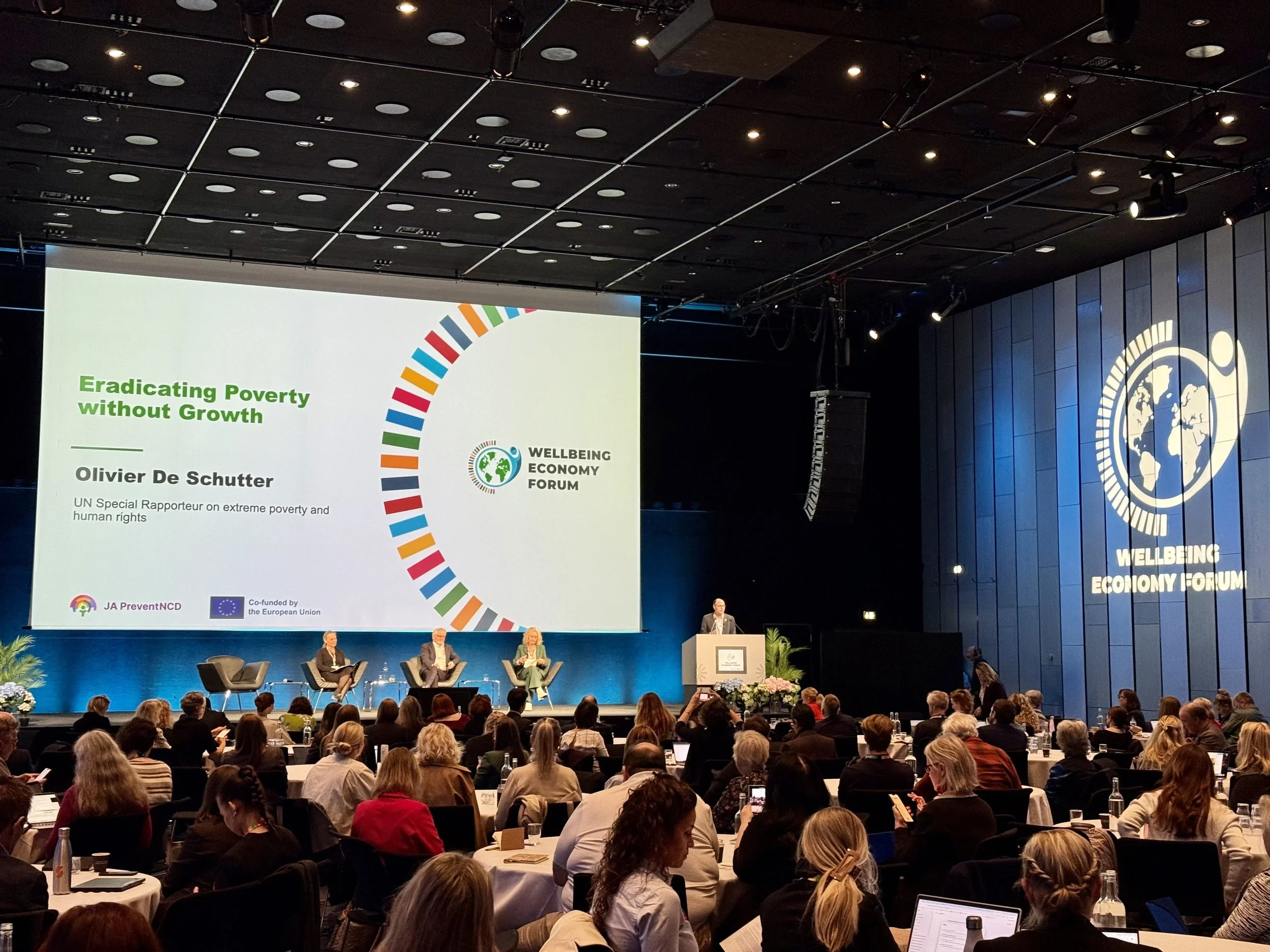
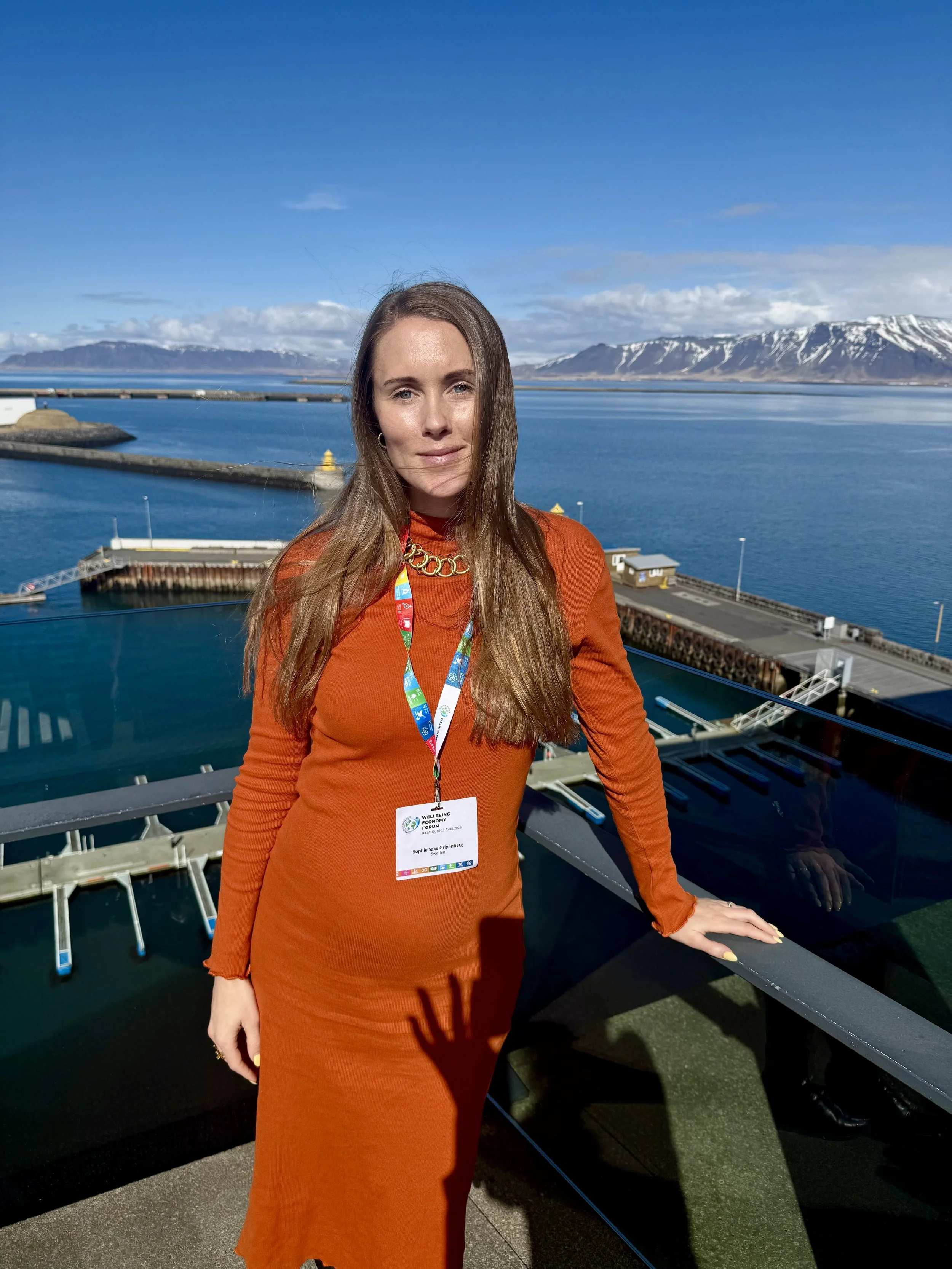
A few weeks ago, I attended the Wellbeing Economy Forum in Reykjavík, Iceland, a gathering of policymakers, academics, and changemakers working to reshape our economic systems to better serve people and planet. Held at Harpa Concert Hall and organised by the Icelandic Directorate of Health, the Forum is part of the EU-supported Joint Action PreventNCD. It brings together actors across sectors to explore how wellbeing, not GDP, can guide policy and decision-making.
This year’s programme reflected that ambition.
From the opening fireside chat on Leadership and Wellbeing in the Age of AI with Halla Tómasdóttir and Jesper Brodin, to sessions like Ending Poverty Through a Wellbeing Economy? featuring Olivier De Schutter, the Forum moved between high-level policy discussions and broader systemic questions.
I attended to represent Economy for the Common Good (ECOnGOOD International) and Wellbeing Economy Alliance Sweden (WEAll Sweden), to connect, learn, and deepen my engagement with policy-making in this space.
I’ve known about Wellbeing Economy Alliance since I first began exploring new economic thinking, searching for ideas that aligned with my own conclusions about the shortcomings of our current system. So being there, in person, mattered. The wellbeing economy space is unique. It brings together experienced policymakers and a values-driven movement, grounded in collaboration, kindness, and bridge-building. It’s a space I genuinely enjoy being part of.
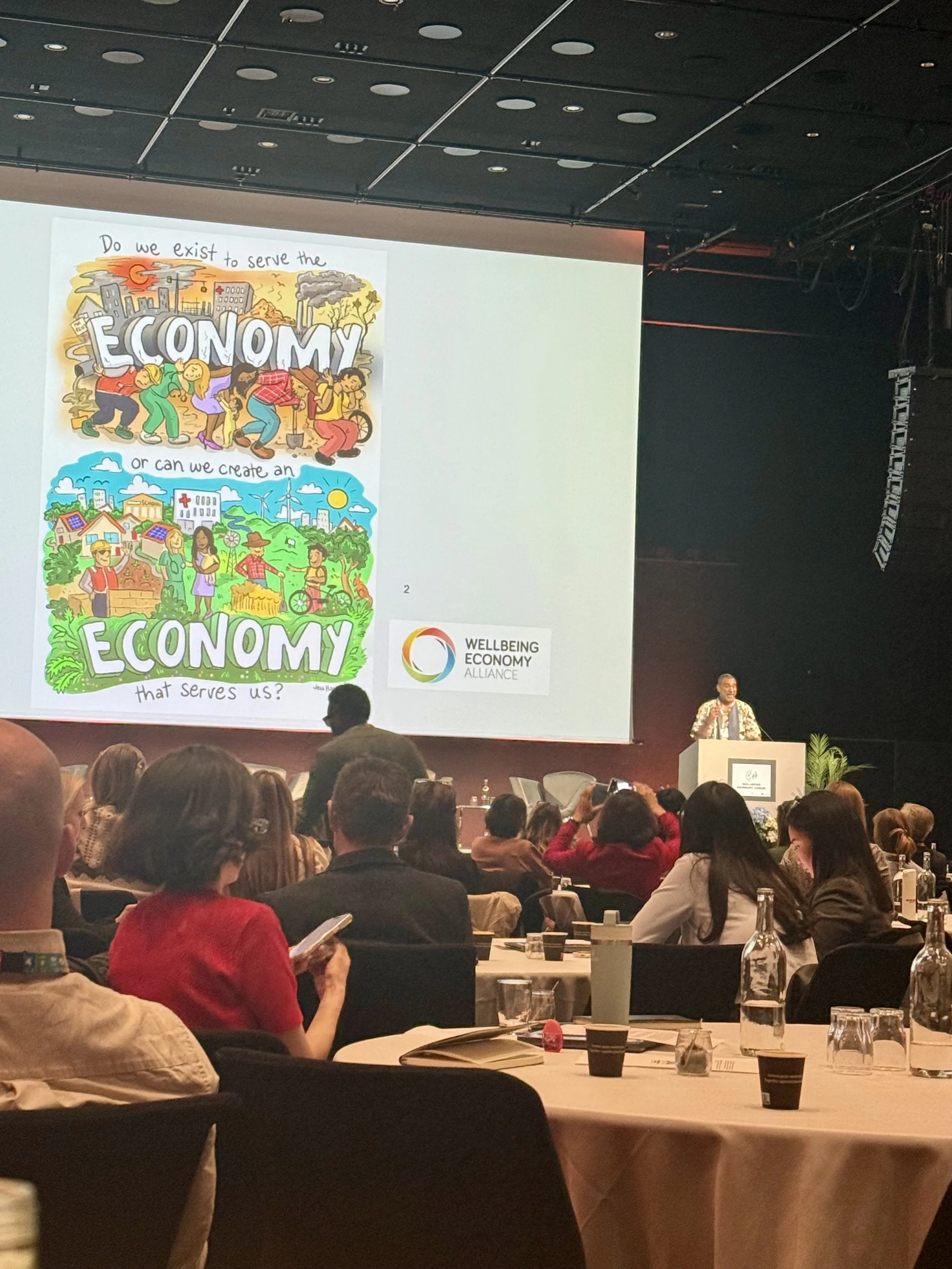
Kumi Naidoo’s presenting
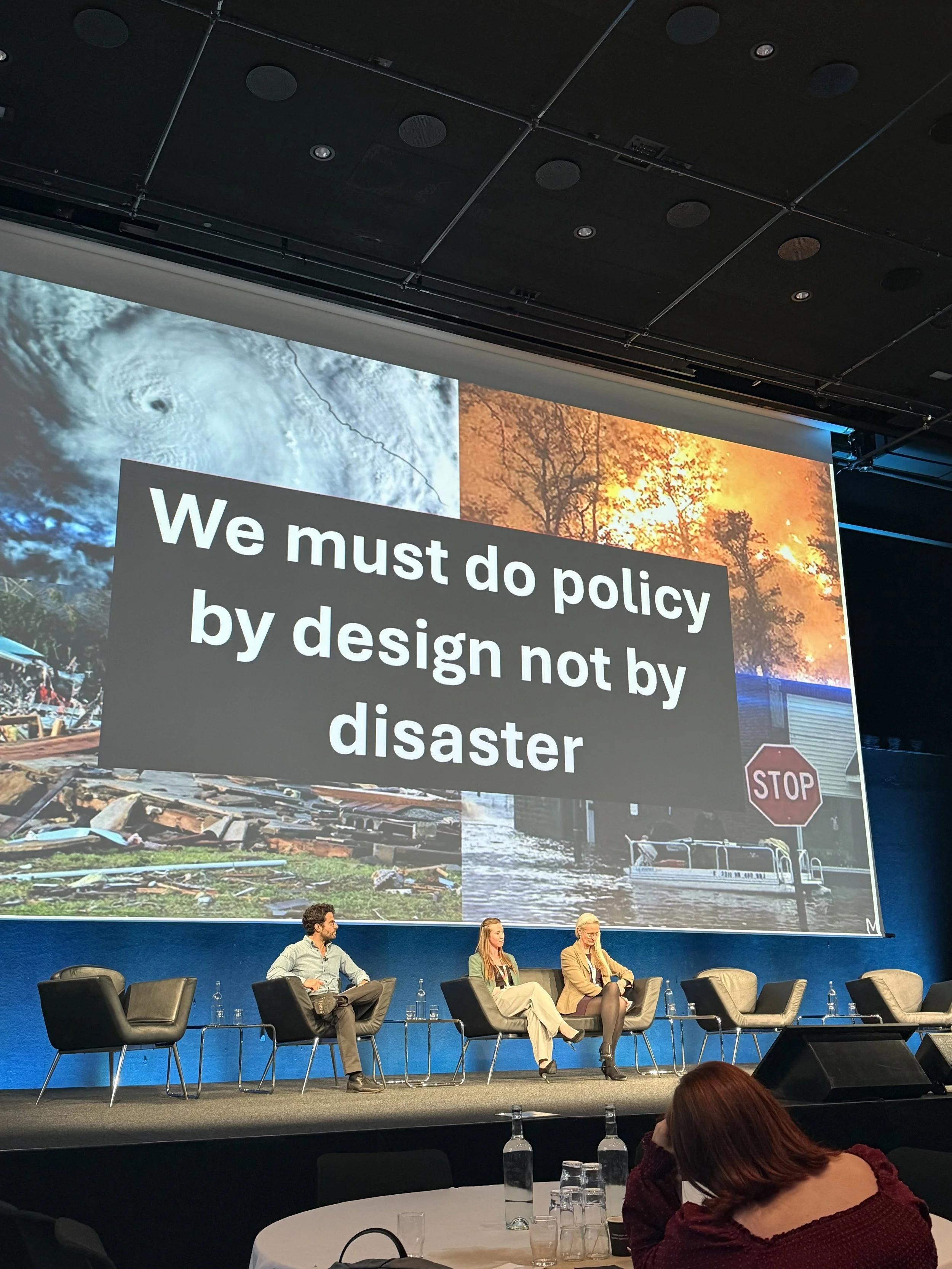
Sophie Howe’s presentation with panel
About the programme
And Iceland delivered. Ending the days in hot springs, in conversation with people working on systemic change, is not the worst way to process global challenges.
The programme itself was good. I particularly enjoyed sessions like How to make Beyond GDP a reality, led by Sandrine Dixson-Declève and Rutger Hoekstra, which highlighted concrete progress on metrics for wellbeing, inclusion, and sustainability. Hoekstra explains that measures don’t change the system, but it helps us to create a new narrative of the purpose of the economy. I also enjoyed the session Future Generations First! with Wales Future Generation Commissioner Sophie Howe, who demonstrated how long-term governance can take shape in practice. But how difficult it is to move away from crisis response to policy by design. In another session, the Nordic model was challenged by WELAs founder Mads Falkenfleth, not as a global ideal, but as a paradox. Strong welfare systems are in place, but the countries do exceed planetary boundaries, and thus cannot be role models.
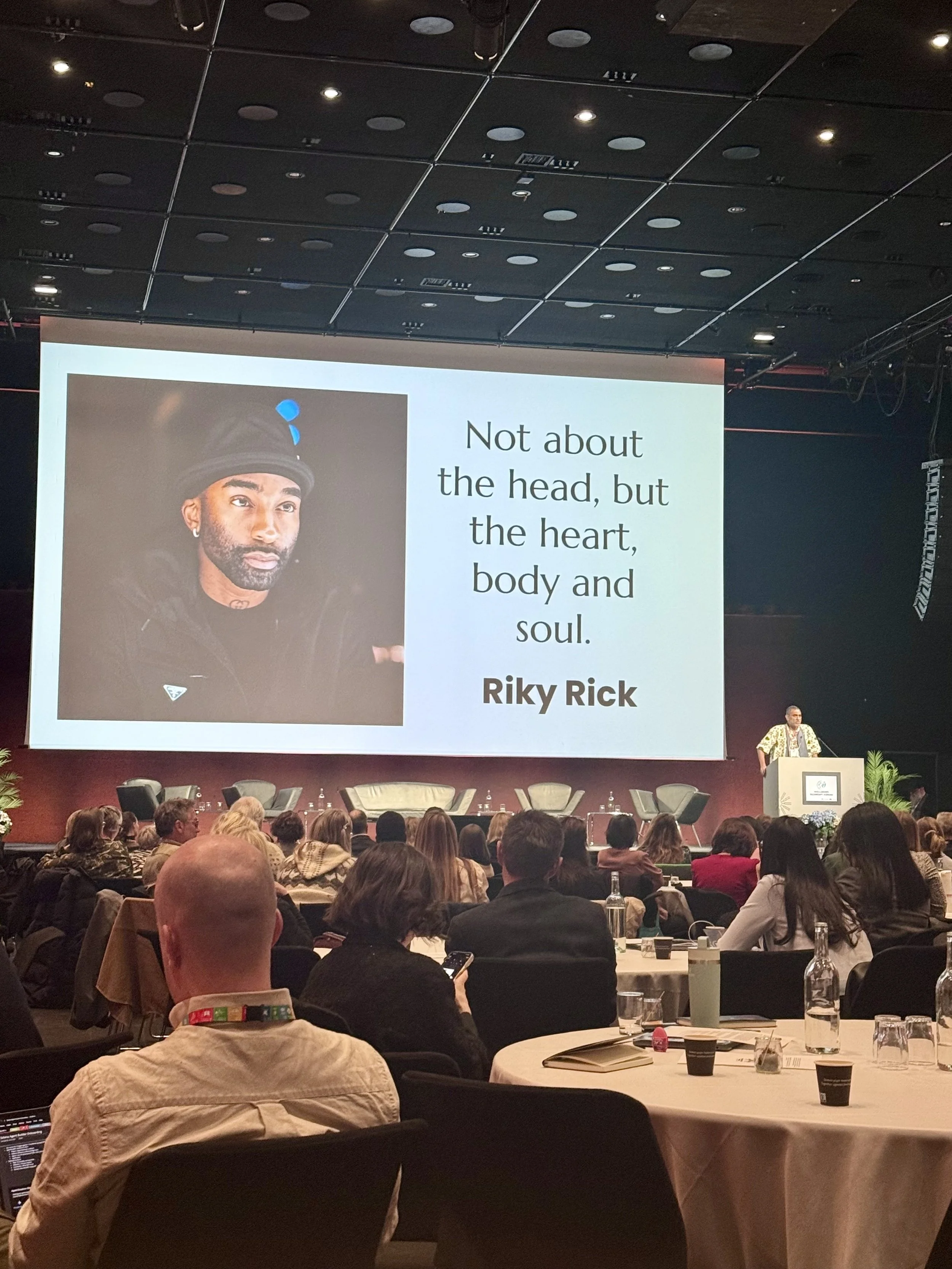
Kumi Naidoo’s about his son
About the design
At the same time, much of the format remained traditional: panels, presentations, and limited interaction, which I always think brings a sense of mental overload and lack of embodiment. There were elements of the “wellbeing space” (morning yoga, for example), but overall, the programme leaned more toward intellectual exchange than embodied or experiential engagement.
This matters.
Because if transformation is the goal, we need to engage humans not only through data and policy, but through emotion, connection, and lived experience. A speaker who did reflect upon this was Kumi Naidoo, President of the Fossil Fuel Non-Proliferation Treaty Initiative. He shared his experience about the mourning of an Icelandic glacier, an event that brought thousands together. He described it as one of the most impactful experiences of his life, even compared to his leadership roles at Greenpeace and Amnesty International.
Because it spoke to the heart, not just the head.
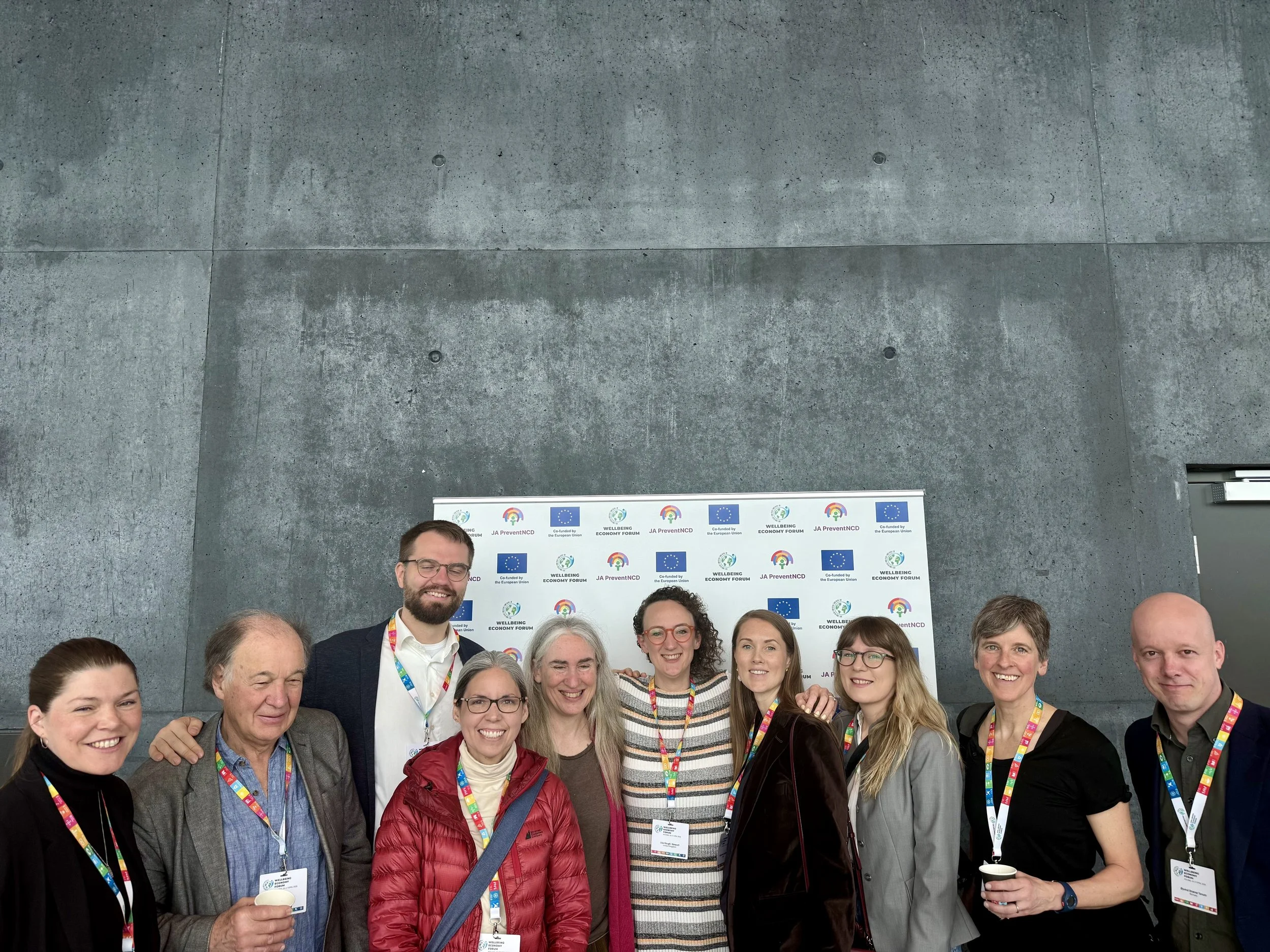
With the Wellbeing Economy Family
Thematic challenges that was raised
And throughout the Forum, one theme kept returning: the gap between long-term transformation and short-term reality. This became especially clear in discussions around policy. Yes, we now have wellbeing economy governments, new metrics, and roles like future generations commissioners. But these initiatives often operate within a system that remains fundamentally fragile, with key politicians who’s initatives stopes when leaving office.
Many wellbeing policies are long-term by design, which makes it hard to communicate and be relevant for people today.
So the question becomes:
How relevant is this agenda for someone struggling today?
For young people facing unemployment?
For societies dealing with immediate crises?
Another recurring theme throughout the Forum was the long evolution from what originally started as an environmental movement more than 50 years ago, through debates like The Limits to Growth, to today’s broader wellbeing economy and systems change agenda. But there was also an underlying recognition of something uncomfortable: Despite decades of awareness, activism, reports, summits, targets, and growing scientific understanding, many of the trends are still moving in the wrong direction. Climate emissions are not decreasing at the pace needed. Biodiversity loss continues. Material extraction continues to grow. Democracies are becoming more fragile in many parts of the world. Peace and stability are declining rather than increasing.
And while the environmental movement is often criticised for this lack of progress, that criticism also ignores reality. The movement itself has never been one unified group, and it has never had the same level of power or resources as the industries and actors benefiting from extraction, consumption, and short-term economic growth.
At the same time, without environmental movements and civil society pressure, we likely would not have achieved many of the advances we now take for granted, such as action on the ozone layer, global environmental agreements, the Sustainable Development Goals, or even much of the broader public awareness around climate and ecological issues. Still, the question remains:
Are we using the right methods?
Are we too focused on complexity, democratic processes, inclusion, and long-term thinking, while lacking the ability to create urgent societal mobilisation? Are we failing to connect with ordinary people beyond reports, metrics, and policy language? I hear this discussion more and more lately:
Find the shared narrative.
Speak to the heart.
Communicate more simply.
Make it emotional.
Make it culturally relevant.
And I understand that perspective. I’ve said similar things myself. But there is also something exhausting about the expectations placed on people working in these spaces.
It is already demanding to move from focusing on symptoms, to understanding systems, to learning policy, governance, economics, and implementation. And suddenly, on top of that, you are also expected to become an exceptional communicator, storyteller, facilitator, psychologist, and public figure capable of emotionally moving entire populations.
I’m not convinced any individual or movement can realistically carry all of those roles at once. So I left with a more honest conclusion:
I don’t know what will ultimately create large-scale systemic change.
I don’t know if change will happen through policy, crisis, culture, technology, or something else entirely.
And I don’t think anyone truly knows.
What I do know is that spaces like this still matter. Not because they have all the answers, but because they create connection, reflection, collaboration, and momentum among people trying to move society in a different direction. That, in itself, has value.
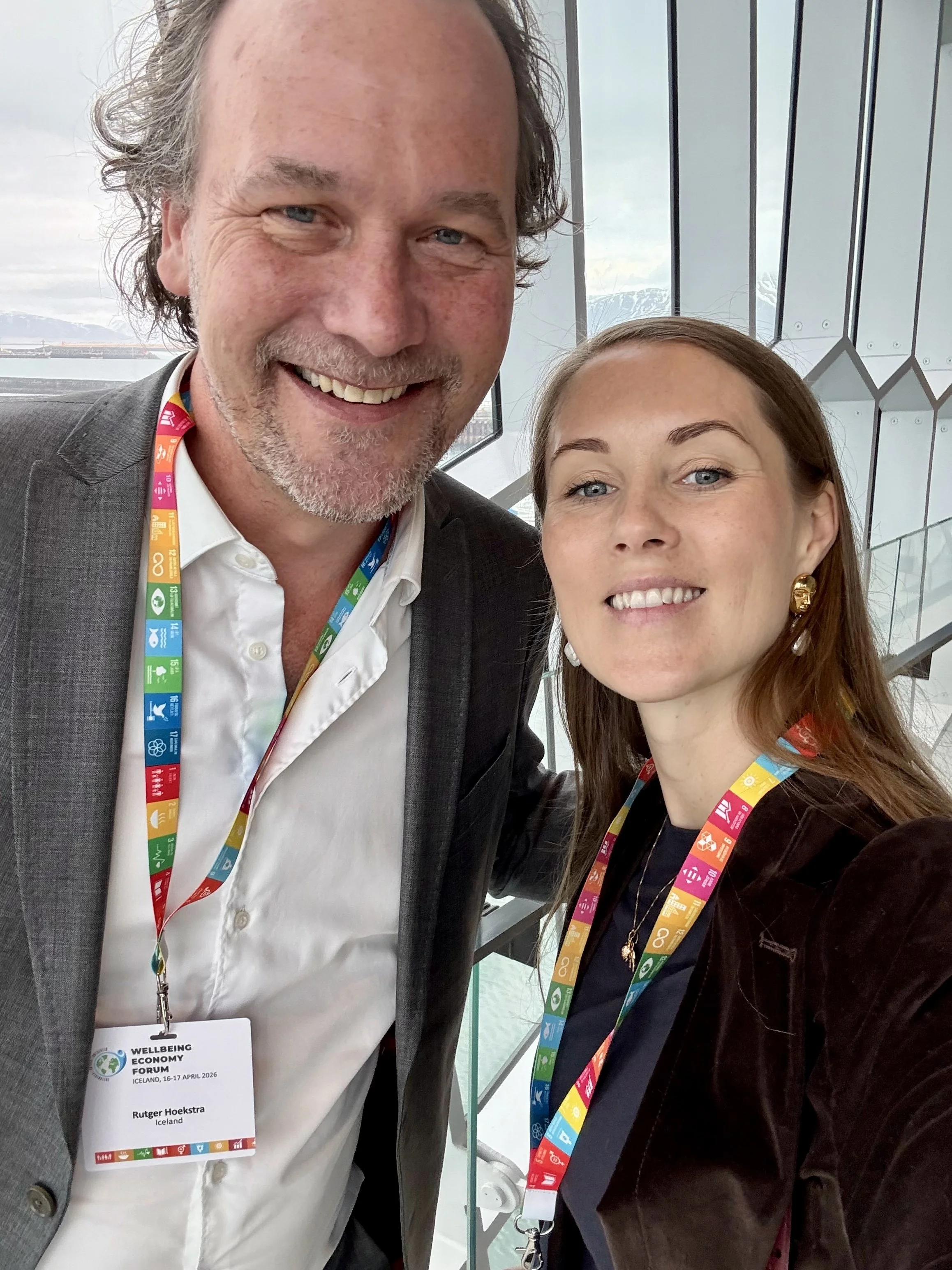
With Rutger Hoekstra
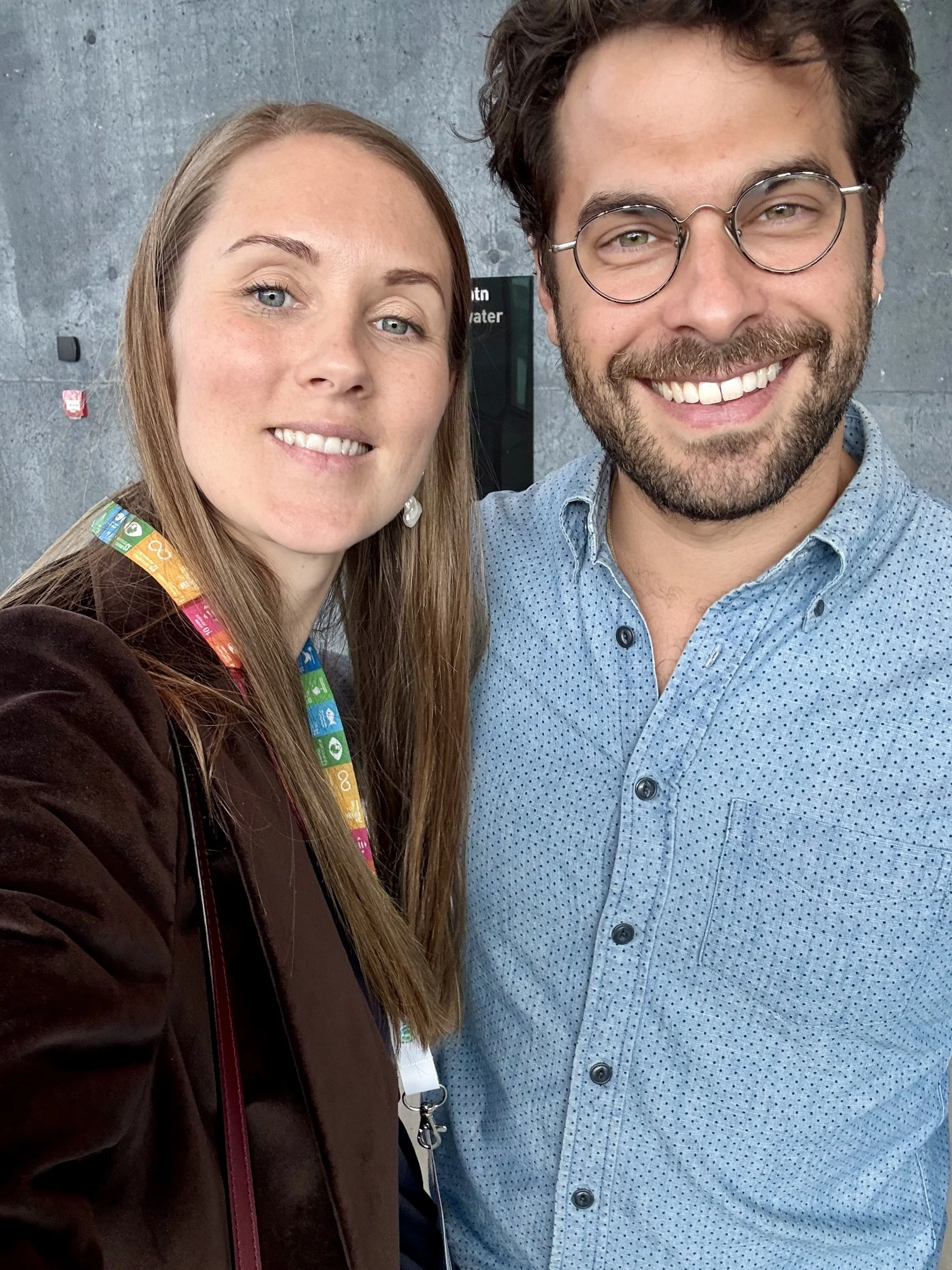
With Michael Mezzatesta