MY YEAR IN 2023

Second year as self-employed

Last year marked an important decision in my life—to become self-employed (you can read the 2022 article here). Primarily driven by a desire for increased freedom and dedicated time for personal projects. My major objective for 2023 was financial, since we all need a salary (I’m sure fellow entrepreneurs can relate). Beyond that, I aimed to better define the projects and clients I wished to engage with and the ideal working environments. Reflecting on the past year, I now have found a sense of clarity in these aspects. Being engaged in meaningful work and consistently receiving a salary has been immensely gratifying. The entrepreneurial dream can easily break down when progress stalls, but the experience of potential success is undeniably empowering.

This year's journey has extended beyond professional pursuits, encompassing a struggle to maintain faith in humanity and the world. I've grappled with intense grief, questioning the significance of my work. At the same time, I've felt a strong determination and empowerment. Ultimately, my goal has become more clear —I aspire to contribute to system change and reshape the economic landscape while preserving my autonomy.

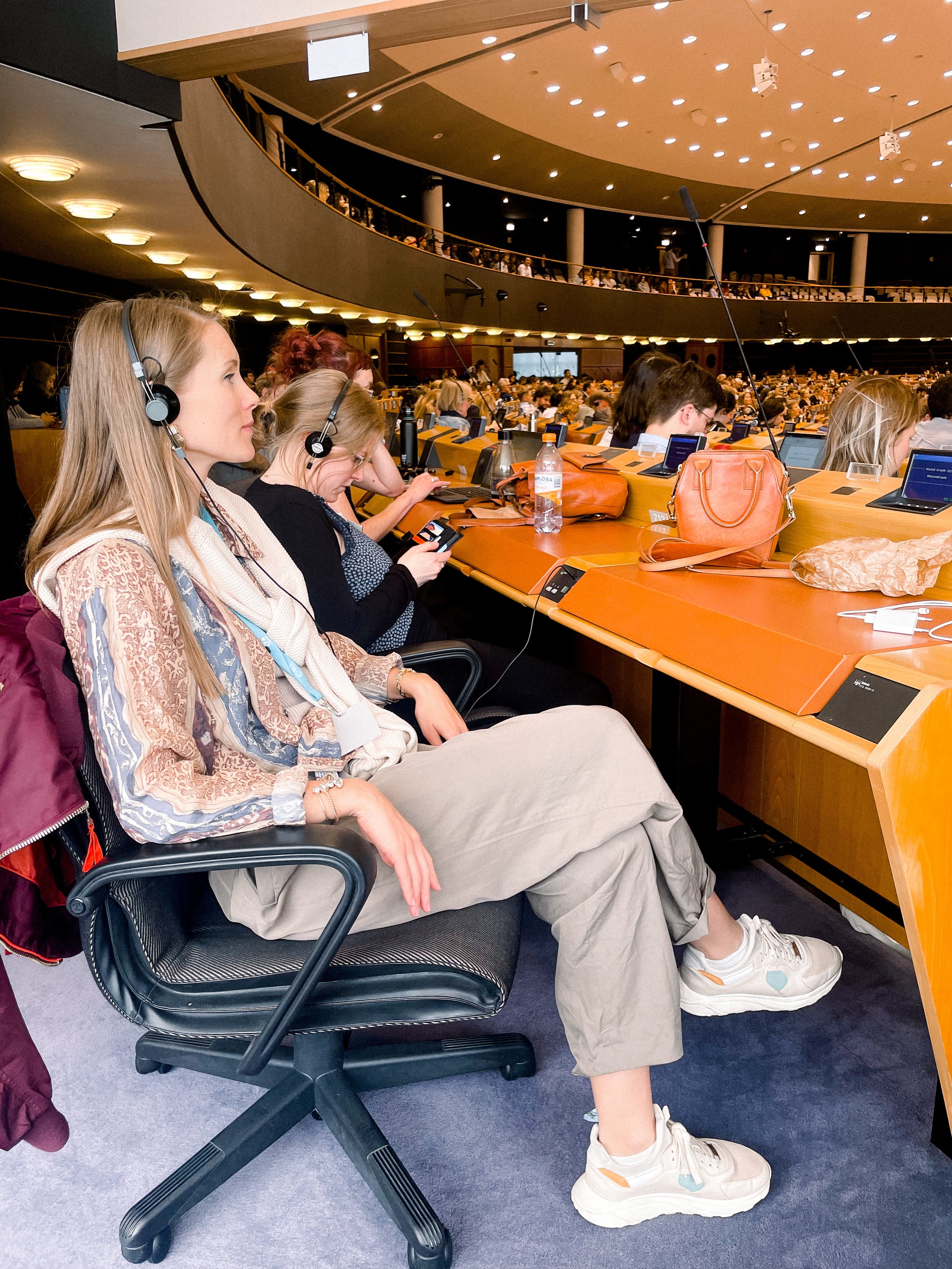
Of course, inspired by the Beyond Growth Conference hosted by EU parliament members in May this year, we have finally reached the maturity to look at our economic system. I recently shared my wish to work in economics on LinkedIn, where I also acknowledged the uncertainty of my path ahead. I think I have learned to embrace the unknown, recognizing that the world is inherently unpredictable. While this uncertainty can be intimidating, it also presents opportunities. Our collective actions can become one powerful force, driving social change and reaching critical social tipping points when we at least expect it.

This article is just a summary of some work that I’ve done and it helps me to see that I do make a difference. Because I do have moments when it does not feel like it. It is also essential not to focus too much on doing, but rather embrace one’s being. Taking breaks for self-care and enjoying life is not just acceptable—it's necessary. We need a multitude of contributors, not just a few shouldering everything. Though the world may seem to be on fire, my commitment to continue working for the world I believe in is stronger than ever.


My course in inner and outer wellbeing

Around this time last year, I dedicated myself to the finalization of my course in Inner and Outer Sustainability. My work led to the course's launch in April 2023, with an initial cohort of 12 participants. The experience was profoundly rewarding, and the feedback surpassed my wildest expectations. It became evident that the intersection of personal journeys and global issues resonated with many. While I intended to host the course biannually, a temporary break was necessitated by my involvement with the United Nations.

For those intrigued to delve deeper into the course and explore the firsthand experiences of past participants, you can find more information here! Don’t hesitate to sign up if you’re interested, it's a non-binding inquiry that secures your spot before capacity is reached. Don't miss the opportunity to join this transformative journey!


Human Rights and Sustainability

The majority of my time has been devoted to supporting The High Commissioner for Human Rights. My involvement includes active participation in their Greening the Blue initiatives, although the specific details of my contributions must remain confidential. Working with OHCHR has been a genuine honour, providing invaluable insights into the intricate landscape of human rights.

Despite the formidable global challenges and widespread violations of human rights, delving into this realm has inspired me to position human rights as a fundamental pillar of sustainability. It's become evident that sustainable development cannot exist in isolation from the principles of human rights. Although the United Nations has faced heightened criticism, particularly in recent times, my own perspective was shaped in high school, when I wrote a thesis on the Security Council, which made me realise what the UN can and can’t do. Working with the organization firsthand, there is no doubt that there is dedication among its staff. Some colleagues have even become friends, contributing to my admiration for all human rights defenders and those committed to working for humanity.

I encourage you to invest time in understanding human rights. As sustainability professionals, we serve as advocates for the human rights to a healthy, clean and sustainable environment. Embracing these rights not only aligns with our professional roles but also contributes to a broader commitment to human dignity and global well-being.
 

Public Speaking and Seminars

There is no greater joy for me than connecting with people, sharing knowledge, and inspiring them to make change. Hosting seminars and engaging in public speaking rank among my most cherished activities in life. This year has presented several opportunities for me to step away from my desktop work and take the stage.

  • Seminar about sustainable fashion in Jordan with Jordanian Fashion Designers at the Swedish Embassy

  • Seminar and workshop with ABF Dalarna about sustainable development

  • Seminar and workshop in Amsterdam about Beyond GDP Growth for EU members

  • Moderating a seminar on human rights and sustainable fashion with Parul Sharma as a speaker, presented by Ninyes during Slow Fashion Week

  • Seminar at Uppsala University about welfare measures Beyond GDP

  • Seminar at Åva High School about sustainable development

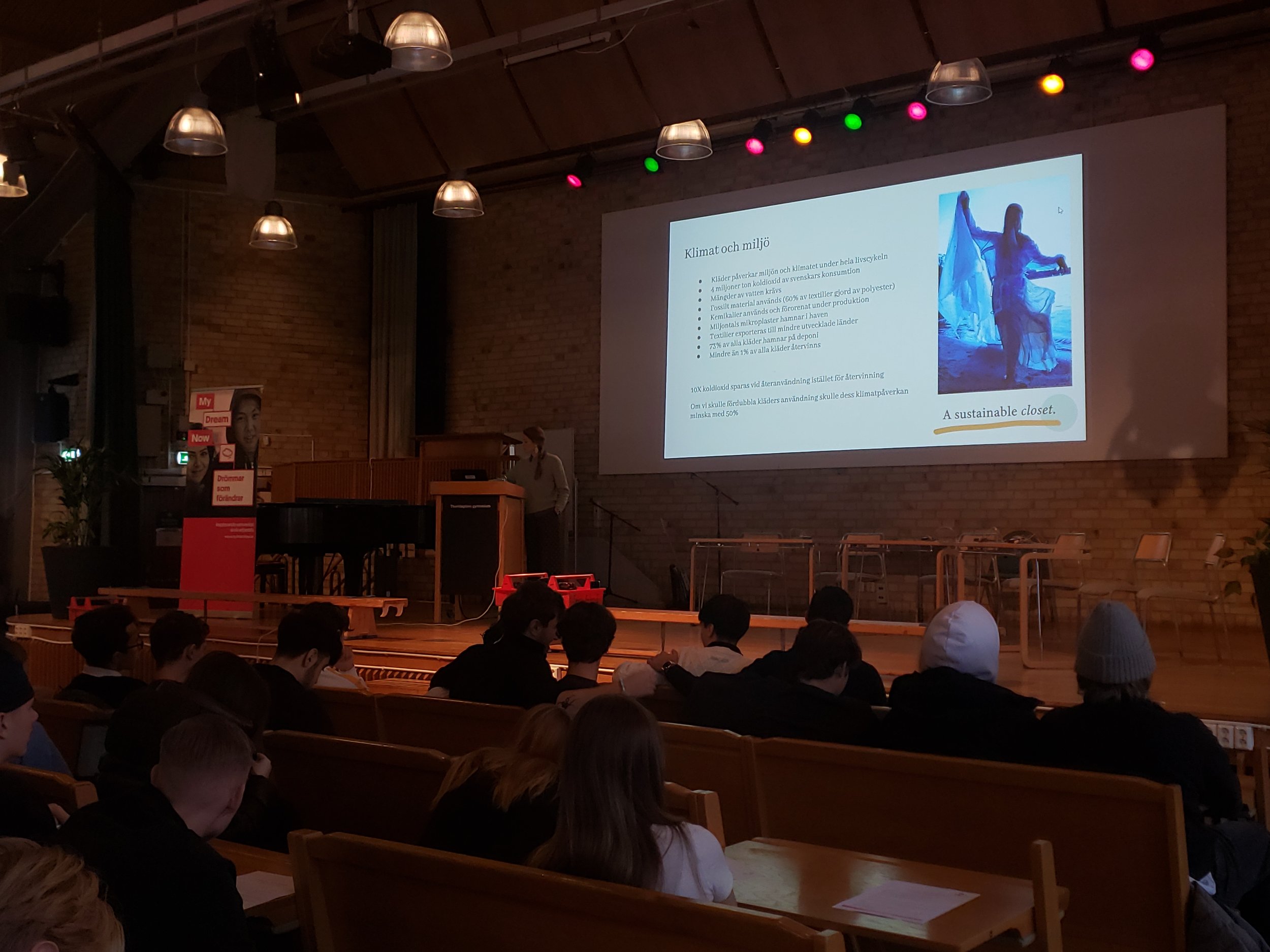
  • Seminar at Thorhildsplan High School about sustainable fashion presented by My Dreams

If you're interested in booking me for a seminar or want more information about the topics I cover, please visit here!

Additionally, earlier this year, I had the privilege of being a guest on Sanja Tegeltija on her Podcast En Timma Med, where we discussed inner and outer sustainability. You can listen to the episode here!


A sustainable closet

Two years ago, A Sustainable Closet (ASC) established its business model, and the economic sustainability of the platform has become a crucial focal point for me. Without proper funding, the platform cannot achieve the difference it aspires to make. In the course of 2023, ASC has engaged in numerous paid collaborations, receiving requests daily. The challenge lies not in securing collaborations but in aligning them with our stringent sustainability criteria. The ongoing development of the platform is something I eagerly anticipate. Here are some key figures from 2023:

  • Published 91 articles on sustainable fashion

  • Made 64 interviews with people, brands and stores leading the change

  • Grown our platform with an 87% increase in visits compared to last year

  • An average of 8500 visitors per month have read our content

  • Published our own editorial - Plastic is it Fantastic?

  • Mapped and published second-hand city store guides in more countries such as the US, Spain and Italy.

  • Had several guest bloggers, interns and rewarding collaborations with other change-makers for a more sustainable fashion scene

Sign up for our newsletter and learn more here!


Civil society

For those who have been following my journey for some time, you're aware of my longstanding commitment to civil society. With 12 years of experience in the field, my focus has predominantly been on providing strategic support. I engage in this work for several reasons: to safeguard democracy, to counterbalance the profit-driven economy through non-profit organizations, and as a means to channel my concerns about various societal trends, to do something is essential for me.

Here are some of the meaningful involvements I've had in 2023:

  • Djurens Rätt: In my third year as a board member, I am immensely proud to contribute to the cause of animal rights through this organization. The level of professionalism within Djurens Rätt is truly commendable.

  • Wellbeing Economy Alliance Sweden: Having joined the core group, I was elected as a board member this autumn. The enthusiasm and honour I feel in contributing to the development of Weall Sweden are beyond words.

  • Organic Beauty Award: For the second consecutive year, I'm a part of the jury for the Organic Beauty Award. It's a delightful way to engage in sustainability actions while having some fun!

  • Political Engagement: This year, I've taken a step into a new arena by joining a political party and being part of a working group. Without political change, there will be no change.

  • Positive Money and Demokratisk Omställning: Delving into alternative economics, I've joined book clubs associated with these organizations. 2023 has been a year of intensive study and exploration in the field of economics.


Personal Development

The year 2023 brought numerous celebrations and significant changes into my life, marked by fun occasions such as three close friends getting married, six friends welcoming new babies, and beautiful train journeys (Stockholm-Brussels, Stockholm-Amsterdam, Bucharest-Berlin-Stockholm, Stockholm-Geneva-Barcelona). However, amidst the festivities, I encountered three major shocks that posed considerable mental challenges. Here's a summary of some insights gained:

  • Ask for help - In moments when the usual coping mechanisms fall short, don't hesitate to seek assistance. It takes courage to ask for help when needed.

  • Allow yourself to feel - Embrace anger and grief rather than holding onto emotions, as suppressing them only intensifies suffering. Identify safe spaces to express and release these emotions.

  • It's okay to zoom out - If a topic consumes your thoughts and disrupts your sleep, it's crucial to disengage. Recognize when an issue has become overwhelming and prioritize your well-being.

  • Combat hopelessness with action - When feelings of hopelessness arise, compile a list of actions you take to contribute positively to the world. While you can't help everyone, your efforts matter and make a difference.

  • Run your business in alignment with your values - Uphold personal values in business practices. Stick to principles such as not working for free, setting rates according to your experience, collaborating with those who care about people, and avoiding competition or sales that don't resonate with your heart. While this may deviate from conventional business advice, I believe, it fosters a happier life.

  • Prioritize joy and celebration - During life's challenges, make time for celebrations. Whether it's dancing late into the night or participating in circles and friends' gatherings, nurturing connections within communities is vital for personal thriving.


What I’m looking forward to in 2024?

My journey into 2024 begins with a blank canvas. While a few opportunities and numerous ideas and aspirations lie ahead, my primary focus right now is to give myself the rest I truly need.

In the coming year, I want to prioritise activities that bring me joy — dancing more, painting more, and laughing more. Just to smile more often. That is my goal.

The Historical Beyond Growth Conference 2023

Introduction

Two weeks ago more than 2000 people gathered in the halls of the European Parlament to discuss Beyond Growth. The Beyond Growth Conference 2023 was initiated and organized by Members of the European Parliament; a collaborative effort between The Greens/EFA, The Left, S&D, Renew Europe, EPP and NI made this event possible. Partner organisations were the Wellbeing Economy Alliance, ZOE Institute for Future Economics, New Economics Foundation, The Club of Rome, Degrowth, Friends of Earth Europe, Finance Watch, European Trade Union Institute and the European Environmental Bureau among others.

This is not the first time a conference on the theme of moving beyond GDP growth in the EU is happening. In 2018 the Post Growth Conference took place, but it was a small event with a few selected guests and speakers. This conference was a multi-stakeholder event aiming to discuss and co-create policies for sustainable prosperity in Europe with the purpose to challenge conventional policy-making in the EU. It is even stated on the website “to move away from the harmful focus on sole economic growth”.

The conference was open for anyone to register and many seats were left for civil society. Partner organisation representatives were of course there, but many of the conference participants were students or activists (many times both) who had heard about the conference from their professors or in other networks.

In other words, this conference wasn’t an event with a formal, stiff and traditional seriousness, but rather it was a free gathering with open-minded people seriously seeking new pathways and who truly want to be part of the change. It was said to be the Woodstock of system change. And it truly felt like it! The conference was also entirely free and I would say, if you want to be an inclusive organiser where anyone can join, it has to be free! Priced conferences are not good places for visions for the future and better policy-making!

Personally, I was there as a representative of the newly established organisation Wellbeing Economy Alliance Sweden! The hub is for anyone who would like to engage and volunteer for wellbeing economics in Sweden. If you are based in Sweden, please feel free to reach out, become a part of our core hub or follow us on social media!


Structure of the conference

The three day conference had 7 plenary sessions, 20 focus panels and 4 policy labs. Each session was chaired by one of the co-organising Members of the European Parliament. Besides the main programme, selected participants could co-create policy recommendations on topics related to current policy processes. These interactive policy labs happened at the Chatham House. Personally, I never had the time to go there.

The plenary sessions were long. About 4-6 speakers with 10 minutes each followed by internal discussions before questions from the audience were let in. For someone like me working with mental health and wellbeing, more breaks and shorter speeches would have been preferable.

The days normally started with a plenary for all, had focus panels after lunch and ended with a plenary for all. In that way the majority of the content of the conference (from what I felt) was seen by most participants. For the focus panels, one had to choose and register before the conference, but no one really paid attention to who joined which session.

But I can tell you, it was intense, a few breaks for toilet visits and food, but otherwise it was a run to be able to be in time for each session (since they were all so interesting!).


Who were the speakers?

Several of the speakers came from academia, think-tank groups, non-profit organisations, activism and so on. There was no clear commercial agenda or private corporate interest in place, which I found delightful since many sustainability conferences today are way too much influenced by private interests (from my perspective). To discuss how to move beyond GDP growth will of course require an inclusive approach, including the private sector, but it was very rewarding to listen to people with such a clear and transparent agenda - many times with point of views simply just based on their own academic research.

There were many known and familiar profiles from the wellbeing economy and the post growth movement such as:

  • Timothée Parrique - researcher at the School of Economics and Management of Lund University.

  • Kate Raworth - Senior Associate, Oxford University. Founder of Doughnut Economics.

  • Professor Tim Jackson - Director of the Centre for the Understanding of Sustainable Prosperity (CUSP).

  • Professor Jason Hickel - Institute for Environmental Science and Technology at the Autonomous University of Barcelona.

  • Dr. Vendana Shiva - Physicist, social and environmental activist, ecofeminist and anti-globalisation author.

  • Professor Robert Constanza - Ecological Economics at the Institute for Global Prosperity, University College London.

  • Sandrine Dixson-Declève - Co-president of the Club of Rome.

  • Professor Giorgos Kallis - Institute of Environmental Science and Technology, Barcelona.

  • Professor Dr. Maja Göpel - Director of Research at The New Institute.


There were also other skilled speakers who brought many interesting perspectives who may not always be associated with beyond GDP such as:

  • Professor Johan Rockström - the Director of the Potsdam Institute for Climate Impact Research and Professor at the Institute of Earth and Environmental Science at Potsdam University.

  • Professor Joseph Stiglitz - Columbia University. He is also the co-chair of the High-Level Expert Group on the Measurement of Economic Performance and Social Progress at the OECD, and the Chief Economist of the Roosevelt Institute.

  • Adelaïde Charlier - Belgian climate justice and human rights activist.

  • Professor Rutger Hoekstra - Associate Professor at the Institute of Environmental Sciences, Leiden University. Leader of the WISE Horizons, a large European project, which is pursuing metrics and policies to enhance Wellbeing, Inclusion and Sustainability (WISE).

  • Professor Florence Jany-Catrice - University of Lille, member of the Research Center Clersé (UMR 8019), and Richard B. Fisher Member, School of Social Science (2020-21), Institute for Advanced Study, Princeton.

  • Ann Pettifor - Director of PRIME- Policy Research in Macroeconomics.

  • Corinna Schlombs - Associate Professor of History at Rochester Institute of Technology.

Please have a look at the full speakers list here and don’t miss out on some of the most popular speeches below!


Take Aways

  • Beyond GDP means different things for different people, some are convinced degrowth fans which literally means a decline in GDP while other mean that degrowth doesn’t necessarily mean a decline GDP rather a shrinking economy (which might logically work if we don’t measure GDP) and others prefer not to use degrowth and rather focus on wellbeing economy.

  • That GDP growth is a bad metric for development is commonly understood, but how to move beyond it, what the goal, the roadmap and narrative should be is unclear.

  • Green Growth is still viewed among EU members and commissionaires as a must for development, even though conference participants would probably disagree.

  • The climate and environmental perspective was strong. Also some colonial and social perspectives, but how to focus on the things that matters to people on an individual basis, such as purpose, existential questions or happiness were not as present.

  • There is a lot of work being done on how to measure welfare beyond GDP, there’s plenty of metrics and current work happening in the EU, OECD and in other places on how to mainstream these and develop the indicators - but the question remains how these measures can guide policy-making and budgeting to a larger extent.

  • There were few speakers who went through financial and fiscal policy - especially how they tend to fail and why GDP for the sake of economics is not very effective! The few that did were my highlights of the conference. Beyond GDP will probably not happen without mainstream economics participating in the discussion.


My wishlist moving forward for the EU

  • Beyond Growth Conference (BGC) to be established on a UN level. Moving Beyond GDP needs to be a global approach since our economic system is inter-connected and needs a geo-political perspective.

  • Reforms and policy-making for economic education and degrees. We are currently educating thousands of economic students who are trained in neo-classical economics without even considering that GDP is not a stated fact. It’s man-made and can be remade.

  • Harmonious and standardised implementation of welfare measures and indicators attached to policy-making and budget on a national level. Indicators must guide future policy-making - not GDP.

  • Research and suggestions for implementation of Universal Basic Income for all - no one should be left behind when we’re transitioning to a completely different economic system where labour and jobs will look completely different.

  • A roadmap for a just and climate friendly down scaling and de-coupling of the financial market from the welfare system.

I could go on and on, but the major question is not to what extent GDP can grow without emissions and material extractions (green growth) rather how to decouple socio-ecological prosperity from GDP growth? That is the question that should guide research and policy-making moving forward!


Speeches to watch

Here’s a list of selected speeches of 10 minutes each but you can also watch the other speeches as a part of the full plenary discussions available on Club of Rome YouTube channel or GreensEFA YouTube channel!

Zero Waste Day - What problems do humans have with waste?

Graphics from World Bank

Waste is a major environmental, climate, and economic problem that affects communities around the world. The disposal of waste has a significant impact on the environment, including air, soil, and water quality, as well as natural habitats and biodiversity. Landfills, incinerators, and other waste disposal methods generate harmful greenhouse gases, including methane, which contributes to climate change.

In addition to its environmental impacts, waste also has economic implications. The cost of waste management, including collection, transportation, and disposal, can be substantial. This expense is typically borne by taxpayers or passed on to consumers through higher prices for goods and services. Moreover, wasted resources, including energy, water, and raw materials, are a significant drain on the economy.

The negative impacts of waste are not evenly distributed, and communities around the world are disproportionately affected by waste disposal. Low-income communities are often located near waste disposal facilities, including landfills and incinerators, which emit harmful pollutants and pose health risks. These communities may also lack access to adequate waste management services, leading to the improper disposal of waste, further exacerbating the problem.
To address these issues, individuals, communities, and governments around the world are working to promote waste reduction and Zero Waste initiatives. Zero Waste Day, celebrated annually on March 30th, is a day to raise awareness of waste reduction and highlight the importance of moving towards a zero-waste future. The day emphasises the 5R's of waste reduction: refuse, reduce, reuse, recycle, and rot (compost), as well as promoting sustainable production and consumption practices.

In conclusion, waste is a significant environmental, climate, and economic problem that affects communities worldwide. It is critical to prioritise waste reduction efforts and move towards a Zero Waste future to protect the environment, conserve resources, and promote equitable access to waste management services.

Here are some facts about waste today:

What you can do:

Spread awareness

  • Vote for environmental action

  • Tell politicians to act

  • Tell companies to design responsibly

  • Volunteer and join clean-up days

  • Reduce your consumption of new items

  • Reuse and recycle as much as possible

  • Avoid single-use items and bring reusables

  • Reduce your households food waste

19 women changing our economic system

It is clear that our current economic system is not a stable one, nor a healthy one. It uses way too much material resources, causing biodiversity loss and the climate crisis. Rich people are getting richer while inequality is increasing. Even people in so-called developed countries now are struggling to feed their families.

Change is needed. And women are being at the forefront through research, activism, entrepreneurship and politics to change things. Here’s a selection of women who in different way seeks to work for an economy good for us all and future generations.


Kate Raworth

Kate Raworth is an English economist known for "doughnut economics", which she understands as an economic model that balances essential human needs and planetary boundaries. She is a Senior Associate at Oxford University’s Environmental Change Institute and a Professor of Practice at Amsterdam University of Applied Sciences. Her Ted-Talk on Doughnut Economics has been watched by millions!


Winnie Byanyima

Winifred Byanyima is a Ugandan aeronautical engineer, politician, human rights activist, feminist and diplomat. She is the executive director of UNAIDS, effective November 2019. From May 2013 until November 2019, she served as the executive director of Oxfam International. She has served as the director of the Gender Team in the Bureau for Development Policy at the United Nations Development Programme (UNDP) since 2006. She serves as one of the experts at the Institute for New Economic Thinking.


Kristín Vala Ragnarsdóttir

Kristín Vala Ragnarsdóttir is an Icelandic Earth and sustainability scientist and activist who is a professor of Earth Sciences at the Faculty of- and Institute of Earth Sciences. Kristín Vala's research turned to issues related to trans-disciplinary sustainability science, including city carbon emission management, natural resource availability and management, soil sustainability, sustainable tourism, and achieving the UN Sustainability Goals through the wellbeing economy. She was instrumental in facilitating the participation of the Icelandic government in joining the Wellbeing Economy Governments (WEGo).


Vandana Shiva

Vandana Shiva is an Indian scholar, environmental activist, food sovereignty advocate, ecofeminist and anti-globalisation author. Based in Delhi, Shiva has written more than 20 books. She is often referred to as "Gandhi of grain" for her activism associated with the anti-GMO movement.

Shiva is one of the leaders and board members of the International Forum on Globalization (with Jerry Mander, Ralph Nader, and Helena Norberg-Hodge), and a figure of the anti-globalisation movement. She has argued in favour of many traditional practices, as in her interview in the book Vedic Ecology (by Ranchor Prime).


Katherine Trebeck

Katherine is a political economist, writer and advocate for economic system change. She co-founded the Wellbeing Economy Alliance and also WEAll Scotland, its Scottish hub. She is writer-in-residence at the University of Edinburgh’s Edinburgh Futures Institute and a Strategic Advisor to Australia’s Centre for Policy Development. She sits on a range of boards and advisory groups such as The Democracy Collaborative, the C40 Centre for Urban Climate Policy and Economy, and the Centre for Understanding Sustainable Prosperity.


Melissa Vergara Fernández

Melissa Vergara Fernández obtained a PhD in Philosophy from the Erasmus Institute for Philosophy and Economics, Erasmus University Rotterdam in 2018 and currently coordinates the YSI Philosophy of Economics working group and is an elected member of YSI’s advisory committee. Her research is on economic methodology, in particular on the use and the epistemic contributions of theoretical economic models. She strives to make philosophy relevant for dealing with the socioeconomic challenges that we currently face. She serves as one of the experts at the Institute for New Economic Thinking.


Aja Baber

Aja Baber is a writer, stylist and consultant whose work deals with the intersections of sustainability and the fashion landscape.  Her work builds heavily on ideas behind privilege, wealth inequality, racism, feminism, colonialism and how to fix the fashion industry with all these things in mind. One of the leading figures on the sustainable and circular fashion scene seeking a more circular and just economy.


Diane Coyle

Diane Coyle CBE FAcSS (born February 1961) is an economist and a former advisor to the UK Treasury. She was vice-chairman of the BBC Trust, the governing body of the British Broadcasting Corporation, and was a member of the UK Competition Commission from 2001 until 2019. Since March 2018, she has been the Bennett Professor of Public Policy at the University of Cambridge, co-directing the Bennett Institute. She’s the author of the book A Brief History of GDP which I highly recommend.


Nyeji Ruth Chilembo

Nyeji Ruth Chilembo is an economist and investment professional with experience covering corporate finance, institutional banking, fund management and sovereign debt management. International experience includes diplomatic service in the United Kingdom and Malaysia as an economic advisor handling international trade, foreign direct investments and private equity transactions on behalf of the Zambian Government.
She’s the Co-Founder and Managing Partner wCap Limited, a venture capital firm that works with high-growth female-led businesses in Africa seeking technical expertise and access to growth capital. wCap is the only female-owned VC firm in Zambia. wCap aims to close part of the funding gap that exists for women-led businesses by generating high returns whilst delivering a positive economic impact by investing in women-owned and led businesses in Southern Africa.


Jennifer Hinton

Dr. Jennifer Hinton is a systems researcher and ecological economist. Her work focuses on how societies relate to profit and how this relationship affects global sustainability challenges. Her relationship-to-profit theory uses systems thinking and institutional economics to explain how key aspects of business and markets drive social and ecological sustainability outcomes. She started developing this theory in the book How on Earth, which outlines a conceptual model of a not-for-profit market economy – the Not-for-Profit World model. She holds a double PhD in Economics and Sustainability Science. As an activist, she collaborates with civil society organizations, businesses, and policy makers to transform the economy so that it can work for everyone within the ecological limits of the planet. She is a researcher at Lund University and a senior research fellow at the Schumacher Institute.


Jayati Ghosh

Jayati Ghosh is an Indian development economist. She is the Chairperson of the Centre for Economic Studies and Planning at the Jawaharlal Nehru University, New Delhi and her core areas of study include international economics, employment patterns in developing countries, macroeconomic policy, and issues related to gender and development.


Helena Norberg-Hodge

Helena Norberg-Hodge is founder and director of Local Futures, previously known as the International Society for Ecology and Culture (ISEC). Local Futures is a non-profit organization "dedicated to the revitalization of cultural and biological diversity and the strengthening of local communities and economies worldwide."


Nicola Sturgeon

Nicola Ferguson Sturgeon is a Scottish politician serving as First Minister of Scotland and Leader of the Scottish National Party (SNP) since 2014. Scotland is one of the countries that has a Wellbeing Economy Hub and Scotland is a founding member of Wellbeing Economy Governments.


Jacinda Ardern

Jacinda Kate Laurell Ardern is a New Zealand politician who served as the 40th prime minister of New Zealand and leader of the Labour Party from 2017 to 2023. New Zealand has a Wellbeing Budget and a Living Standards Framework rooted in wellbeing indicators.


Uhuru Hilton

Uhuru is an experienced convener, popular education facilitator, humanitarian program and project designer and relational organizer. Uhuru offers curriculum, facilitation and collaboration in participatory governance, supply chain development, and regenerative and cooperative enterprise. She is an active partner in Community Centric Fundraising, DEI and Trauma-informed Bioregional Regeneration, FarmerXFarmer = Coalition, Weaver Support and other Solidarity Economy forums, projects and campaigns.


Liz Zeidler

Liz is an internationally recognised leader in sustainable wellbeing with over 20 years of experience in connecting, challenging and supporting change-makers. She has been a key part of the development of all Centre for Thriving Place’s wellbeing measurement tools and approaches. She is a globally in-demand speaker and advisor on community wellbeing and place-based approaches to measuring, understanding and improving wellbeing in all sectors.


Naomi Klein

Naomi A. Klein is a Canadian author, social activist, and filmmaker known for her political analyses, support of ecofeminism, organized labour, left-wing politics and criticism of corporate globalization,[fascism, ecofascism and capitalism. As of 2021 she is an Associate Professor, and Professor of Climate Justice at the University of British Columbia, co-directing a Centre for Climate Justice. She serves as one of the experts at the Institute for New Economic Thinking.


Katrín Jakobsdóttir

Katrín Jakobsdóttir is an Icelandic politician who has been serving as the prime minister of Iceland since 2017 and a member of the Althing for the Reykjavík North constituency since 2007.

Iceland is part of the Wellbeing Economy Governments partnership. Iceland has Indicators for Wellbeing which guide government decision-making.


Disclaimer: Most summaries are derived from Wikipedia, you are more than welcome to reach out and add texts or recommend more women who should be on the list.

My year in 2022

It’s been two years since the last time I summarised my year and shared with you some of the work I’ve done and the things I’ve learned. What has happened since then? Well, I quit my full-time job with a fixed contract, moved to Jordan and worked for UNHCR as their Environment Officer. Got married during my holiday break and went to Costa Rica and Mexico for three months for our honeymoon. I also joined Sweden’s largest Animal Rights organisation as a board member, quit some volunteering work that didn’t work out and spent more time going into alternative economics again. I’m back blogging at Tillväxtparadigmet. I can probably say that a third of this year has not been devoted to work but rather to personal development or you could call it life in general.

When I got back this spring I didn’t know what to do. I felt that after 5 years in the humanitarian sector I was longing for long-term sustainable development projects. I felt that environmental management was needed in the world but wouldn’t provide the rapid change the world so desperately needs. At the same time, I felt that I was more and more drifting away from the environmental movement due to a big part of it working with shaming and separation. My inner journey had changed my values and one of my core values is to work for unity and community rather than a “we-and-them” mentality. I wanted to keep on working for planet Earth and its people, but I felt that big changes would never happen if we don’t address the inner sustainability or the overall socio-economic system we live in. In other words, I wanted to find ways to make a difference outside the box and the norms.

What lead me to start my own business?

I didn’t dream of becoming an entrepreneur or a business person. The reason why I didn’t seek a full-time job was that I had a hard time finding a job that would provide me with the possibility to work and live in the way I wanted. So what was it that I was longing for?

  • Flexibility to work from anywhere at any time

  • Ability to work in a diversity of fields and sectors with sustainable development

  • The possibility to find projects and settings that will lead to significant impact

  • Spending my working hours with people I admire, and care about and that inspires me

  • Ability to work on my passion projects such as launching my own course and finishing my book.

You might find some of these wishes typical for my generation (Millennial) but what you also see is someone asking herself what she is going to do with her time here on planet earth. You’re reading a text from someone who dares to jump off the safe path in order to chase her dreams. Someone who believes that anything is possible as long as you are willing to work to get it. Someone that needs flexibility, challenges and meetings with interesting people to thrive.

I turned 33 years old this year, I have a suitable education, plenty of experience, no children or anything that takes my time and a lot of energy and power to add value and be of service to others. Why shouldn’t I jump off the safe road in order to do the things I believe in?

my businesses

Okay, in April and May it was time to get professional. I rebuilt my website, took care of the administrational side of running a business, started networking and worked on my strategy. What is it I really want to do? I had all the time but no plan, so the plan somehow had to develop while doing the journey. Summer came and after 6 months without a salary, of course, my anxiety started to increase, but I stayed true to my mission and my purpose to make this world a sustainable place my way. Autumn came and the clients with it. I've been able to help organisations with their sustainability strategy, I’ve been holding seminars at universities, I’ve been holding a course for environmental work in humanitarian settings and I’ve been working with a foundation that transforms global food systems, among other things. In December I took out a salary, had a look at my strategy and felt that I’m getting closer and closer to seeing how my time on this planet can be a force of good. My first semester as a full-time consultant, speaker and strategies has started well.

interviews, Podcasts and seminars

There are not many things in life that I enjoy more than public speaking and telling stories. While others might faint, I feel alive, at peace and harmonious as soon as someone put a mic or a camera close to my face. I’m truly forever grateful to all of you who have invited me to share my story. But also for the collaborations done where we have been sending good messages to the world together. Thank you! Here comes a selection:

If you want to be invited to my own seminars, you can sign up for my newsletter!

a sustainable closet

It’s unbelievable that something that started as a blog due to my personal interest in sustainable fashion and willingness to help others, has become a professional business. This spring I had the opportunity to revisit the business model and our business strategy to make sure that we are spending time on the right things. This was complemented by a market analysis where several people gave their feedback on the challenges they’re facing to live and consume more sustainably when it comes to clothes. During the summer and the spring, all the content produced had those people’s perspectives in mind - how can we make people’s sustainable closet journey more fun and inclusive? This year we have:

  • Published 94 articles on sustainable fashion

  • Made 106 interviews with people, brands and stores leading the change

  • Grown our platform with a 155% increase in visits

  • An average of 6000 visitors per month have read our content

  • Published our own editorials- Overshoot Day and Pre-loved Disco

  • Mapped and published five more second-hand city store guides

  • Had several guest bloggers, interns and rewarding collaborations with other change-makers for a more sustainable fashion scene

  • Launched our paid partnership deals for the long-term economic sustainability of the business

Sign up for our newsletter and learn more here!

academic

This year I finished my course in circular textile and AI for beginners and during the autumn I’ve been studying political history in Sweden. I highly recommend the course. It’s in Swedish and free for Swedish citizens through Linnaeus University.

Personal development

What can I say? This year has truly been about my inner journey. To separate WHAT I DO from WHO I AM. The thing about being self-employed is that no one is going to know your value except you. No one is going to confirm, approve or applaud your efforts except you. People won’t reach out because they don’t know what you can do, it is your job to explain in what ways you can serve. It has been a true challenge to have so many days and so much time just for me, some of you may dream of it, but I’ve been truly struggling with not having a proper setting to contribute to on a daily basis, to only work for myself when the only thing I want is to help. I have practised staying grateful for what I have, letting go of financial security and over and over again developing a belief in myself and my purpose. You see others being promoted and getting rewards, while you’re sitting there trying to figure out how to create some graphics in Canva for your upcoming seminar nobody have heard about. It is such a humbling journey. And regardless of where it takes me, I have chosen myself and my way of making this world a better place. Honestly, this year has been such a good practice for life and I’m forever grateful that I dared to do it.

what have i learned?

  • Everyone matters and treat them accordingly - it has been clear to me that I don’t want to treat others based on what they can give me. I don’t want to be that person. I want to be ready to learn, smile and appreciate every one. Regardless of who they are, we all have a unique set of values and experiences that we can give to the world.

  • Don’t let fear of judgement stop you - I can’t tell you how many times I’m not talking about sustainability since I don’t live a perfect “sustainable” life. This year has convinced me more than ever that we need to stop shaming people and raise our perspective and make the environmental movement more inclusive if we truly want change.

  • Respect people’s time and you are respected - I have worked a lot on this one. To always be on time regardless of who it is. I truly appreciate someone sharing their time with me, time is the only thing we have and I want to make it count.

  • It is wise to have a plan before starting your own business - I didn’t and I hadn’t saved up for it either. Just a recommendation to anyone who wants to be self-employed. Do some preparations before you start.

  • Always give and support but know your value - it is strange how sustainability doesn’t really seem to have any economic value. Like the knowledge and the insights are supposed to be free. I always believed in being generous and I think we need a movement where we support one another. But if I devote all my time to charity, I can’t pay my bills, which I don’t find sustainable at all. I know what value I bring to the companies and organisations I work for and it’s not free.

  • Impact with the right intention is more important than success. Honestly, I don’t care if you’re super successful, have an amazing business, a well-known brand, a popular podcast or whatever. If you’re not a nice person who finds yourself being more important than others, I’m not interested. I’m interested in intention. What is that you have to give to the world? What is your purpose?

  • There are so many good people out there doing amazing things. This year I’ve been networking and establishing contact with so many amazing individuals. Every time I see people doing good for the world and living their purpose, it makes me smile. Thanks to all of you whom I happened to cross paths with this year.

  • Graphical design! Not only can I build websites and produce content but this year I can also call myself a graphic designer. Whatever you see, it is my own work.

  • Spanish and Latino dance! These are two dreams of mine and finally, I practice salsa and bachata on a regular basis. I also have spent 10 minutes every day for the last six months learning Spanish!

What am I looking forward to in 2023?

  • To actually finish and publish my book about my journey out from depression

  • To launch my course for individuals seeking to improve their well-being and be of more service in the world

  • To keep on working with some clients and find new settings to contribute to

  • To grow A Sustainable Closet further

  • To my upcoming seminars and well-being/sustainability guides that I will launch this year

  • For me and my husband to have our first retreat based on inner and outer sustainability

  • To get back to science and research on alternative economics

  • A secret project that is my dream to do, hopefully, this year it will happen!

I’m looking forward to travelling more, enjoying more, laughing more and helping people and this planet more. I’m so excited to find people and projects where we truly can make a difference together!

Merry Christmas and a Happy New Year!

Barrier and enablers for environmental sustainability in the humanitarian sector - New Report

Screen Shot 2021-01-07 at 15.01.55.png

The Red Cross Red Crescent Green Response Working Group has with funding from Sida (Swedish International Development Cooperation Agency) conducted a research about the barriers and enablers for green practices and implementation of environmental sustainability in the Red Cross Red Crescent Movement.

As the sustainability coordinator of the Swedish Red Cross, I was one of the participants being interviewed, among many other staff from different National Societies. Many of the findings in the report are similar with my own personal conclusions after been working with sustainability for three years in the humanitarian sector.

Just like any other sector, the humanitarian also needs to transform. It has to become more diverse, more inclusive, more effective, more financially sustainable and of course more environmentally and climate friendly. The humanitarian sector impacts the climate and the environment in several ways. Everything from energy, water and material use at offices to local operations.

My understanding is that the humanitarian sector is starting to wake up and there are many good examples of “greening work”. This report do not go into details of what kind of practices those are, but it is highlighting that greening is not only about reducing the carbon footprint, it’s also about greening the supply chain and other operational work.

Here’s a summery of some of the conclusions for successful implemensation from the report, in combination with own personal experiences. I believe many of them are equally true for other sectors and businesses. And I hope that more leaders and board members had these insights. Today many companies and organisation wants to operate in a more sustainable way, few however, knows how to do it. My advice is to listen to the experts and the research that has been conduced and you'll have a far more successful implementation.

  • Sustainability or other terms and concepts used, must be defined for consensus about there meaning. For example in a policy or a strategic document.

  • Clear goals with a time schedule must be in place.

  • All staff needs to be informed and educated.

  • The funding must be long termed and not based on “project money”.

  • There needs to be trained staff and experts facilitating the work.

  • The responsibilities and roles must be specified and there must be mandate to implement the action plan.

  • Do a proper baseline that covers the whole organisation/company so you now where the “low hanging fruits are” but also where the largest climate and environmental impact it.

  • The environmental action plan and strategy must be imbedded in other strategies and plans, not a separate one.

  • The reporting must be embedded in general/annual reporting.

  • The leading group and the board member must get training on why making their organisation/businesses more environmentally sustainable is essential for their businesses.

The humanitarian sector has a long way to go until climate and environmental thinking is integrated in the general work. However, this report is very promising though it provided guidelines and checklists for successful implementation based on existing experiences within the sector.

You can read the whole report here!

The film you must start your 2021 with

This film is presented by Plant Based News and sponsored by abillion. It summarises what happened in 2020 related to the pandemic and animal production. The film talks about the linkages between virus spread and human relationship with animals. It highlights come of the research that has been published this year on health, diet and sustainability. It is more clear than ever before how they way we eat do not effect only our personal health but the health of the whole society. The more animal products we consumer the higher risks are at stake.

The most important thing one can do to stop animal cruelty, lower carbon footprint, stop the risk of future pandemic and restore ecosystem is to go for a healthy and organic vegan diet.

My year in 2020

DSC04073.JPG

This year has been above anything else a remarkable year. For some 2020 has been a less hectic year with more time for family and less travels, meetings and work. It is the year where physical conferences moved into our living room and kitchen through the Zoom and Teams. Some people might have reflected upon what truly matters, what they’re doing for living and how they want things to change for the better. Most people would probably agree that going back to normal is not a good option and that we should instead strive for less hectic lives with fulfilling work and days.

For others this has been the most hard working and hectic year ever. Hospitals has been crowded with sick and health workers have been on the brink to collapse. For some this year has been the most difficult year financially. Several people have lost their jobs and it has been an impossible situation for youth to enter the labor market. The financial stress might have skyrocket and some people might have lost everything where poverty rate have in poorer countries reach new record breaking levels.

Some might have lost someone dear this year. Some have not been able to say goodbye. Others has been isolated from loved ones and we all probably miss hanging out with someone by now. We haven’t been able to hug, meet or kiss and the loneliness might be stronger than ever before.

We have also seen the environment in some places heal. We have seen how emissions have decreased and how consumption and eternal increase in GDP growth is not essential when it comes to saving lives. We have witness which jobs are essential for a functioning society and I believe many of us are asking how we are contributing and how we can create a society with an economy that reflects the society value?

How have this year impacted someone working with sustainability in Sweden?

Swedish Red Cross

As a part of the largest humanitarian organisation, I joined the crisis management to help to assist our humanitarian work in relation to the needs in Sweden due to Covid-19. In my case I helped with donations, in terms of hospital material, from the private sector to hospitals. It was a few hectic months and it was an interesting journey to see how we could assist with these donations.


As the thematic advisor for sustainability I have also continued coordinating our sustainability work related to specific sustainability goals and our annual plan. This year we have for example:

  • Hold several seminars and events related to the climate crisis and it’s humanitarian effects. Not at least during the Red Cross and Red Crescent movements virtual Climate:Red Summit where we held several seminars related to greening and so on.

  • We have kept on sharing our best practices on greening of offices, green humanitarian response and sustainability with other national societies in the movement.

  • We have mapped years of our human diversity work and implemented improved strategies for future work.

  • We have educated the leading group, head of offices and the board on diversity.

  • We have launched second hand online, so more people could safely shop pre-loved items.

  • We have recruited new volunteers as sustainability ambassadors.

  • We have educated volunteers on Fairtrade and sustainability, digitally.

  • We have investigated climate compensation and chosen a strategy forward.

  • We have communicated the sustainability advantage of second hand and participated in the international campaign Circular Monday.

You can read more about the Swedish Red Cross sustainability work in the upcoming Annual Report in 2021. It will be available in Swedish.

A Sustainable Closet

Less than a year ago I thought about the little blog I had started in the autumn of 2019 with the purpose to share my joy for sustainable fashion. I thought, why not develop a proper fashion platform for people who love clothes but want to avoid consumerism? I thought, why not letting others define what a Sustainable Closet is and guide people do learn for themselves what their sustainable closet would be?

Since then I have worked to improve the platform and it’s content. I also got some help from Nicole who have written some blogposts, Emma who have launched our Instagram page and Lotta who is the producer for the upcoming A Sustainable Closet Studio. This year we have:

  • 21 interviews with people we define as Change Makers. People from a diversity of backgrounds and fields, with a diversity of style and expressions that have shared their perspectives on what a sustainable closet is.

  • 11 interviews with stores that offers costumers rental services, second hand or more ethically produced clothes. Several of them are start ups, such as Cirqular, Hyper, Hack your Closet, Rerobe and Tise. They are eager to contribute to a massive change in the way we enjoy clothes.

  • 9 interviews with brands. These brands has put sustainability at the core of their business model. Several of them work with up-cycling such as Cornelia Sun, Reused Remade and Elvis & Kresse.

  • Published 71 blogposts since the re-launch in May 2020. Our posts has been about the sustainability issues related to the fashion industry, new ethical brand, inspiring change makers to follow, tips on movies and documentaries and ideas for outfits available second handed.

  • Mapped the best digital platform for pre-loved consumption in Sweden. There’re currently 19 ways to circulate fashion digitally in Sweden.

  • Mapped the best second hand and ethical stores in 5 Scandinavian cities such as Malmö, Lund, Gothenburg and Copenhagen. With the help of influencers such as Jeanbosco Nzubaba and Tess Waltenburg.

  • Reached 2500 monthly readers in average. This is done without any marketing, investment or team behind the platform.

  • Launched our Instagram page.

Sign up for our Newsletter and find all the content here!

Youtube, podcasts and seminars

Several events and conferences has been cancelled which has definitely been evident in my sector and my calendar has been less booked than it normally is. Honestly, I miss meeting people physically, discussing sustainability issues and inspiring each other to find ways to move forward. However, I have done a few things this year digitally even though my focus has been the work I’m doing at Red Cross.

  • Published 21 blogposts on sustainability facts and reports. I read a lot so I have decided to share some of that information on this blog format, Educate Yourself.

  • Collaborated with my yoga teacher in India. The yoga community has been highly negative effected by the pandemic so me, and the best yoga teacher I know, launched a digital yoga training with students in Sweden and my interview with him has been published on YouTube.

  • Held a seminar on sustainability with Svenska with Baby.

  • Interviewed by Fairtrade Sweden on sustainable consumption.

  • Interviewed by Evolution Chanel on our train trip from Stockholm to HongKong.

  • Interviewed by WWF Youth on sustainability.

  • Held a seminar on reduced travels and climate impact of the Red Cross at Zero Mission.

Here are links!

Academic

This year we have continued on our academic paper about Socio-Ecological Prosperity for sustainable development, which unfortunately won’t be finished as planned this year. I’m very much looking forward to have my first academic article published and the content of this article is truly the most interesting I know. It’s about how to measure development and progress within the Planetary Boundaries.

Personal growth

I would probably say that I’m definitely have grown as a person and become a much happier and resilient person. My health has been my major priority this year. I have done yoga, meditation and exercise on a regular basis. I have slept the hours I needed and have in general stressed less. I have definitely made sure my days are not stressful and I have almost became an expert on not planning my days and take the day as it come. I have been on some lovely retreats, deepening my meditation, practice gratefulness and in general been more kind and present. I have read several books and practiced more of what I preach.

It feels wonderful and I can’t wait to see what the future holds in terms of moving from brightness to brightness, as the vipassana teacher N. S. Goenka says.

What have I learned?

  • How to design a website. Honestly, I had no idea 1.5 years ago and what you are reading now and A Sustainable Closet is my own design and work.

  • Deepen my knowledge in the Paris Agreement and the need of capturing CO2 and science based reduction.

  • There’s no point and criticising leadership. Be the leader you wish to see.

  • When others complain, don’t join.

  • The world might collapse but it is where it needs to be.

  • Mother Earth will hit back if we don’t start to put things right.

  • Looking after your health is not only a service to yourself, but also to the society.

  • Make sure your loved ones don’t feel lonely.

  • You don’t know whats good or bad and each moment is an opportunity to grow.

  • You know nothing, and keep on being humble and educating yourself is the key.

  • Stay true to your values and say no to whatever doesn’t serve you.

  • You are true manifested and whatever you dreamed of has almost come true to 100%.

  • A good laugh is never a waste of time.

  • If the world is going to be a sustainable place. We need to be able to present the vision and communicate that better world.

  • People won’t join a change they can’t see how they will benefit from.

  • Veganism is here to stay and soon the rights of nature and animals will be a part of the sustainability paradigm.

What do I’m looking forward to in 2021?

  • Finishing my book about mental illness and roads towards happiness.

  • Start writing on my second book.

  • Contribute more to economics and research about welfare measures.

  • Keep on making the humanitarian and development sector more sustainable.

  • Launching my own updated content with videos and graphics related to sustainability.

  • Take A Sustainable Closet on a new level.

  • Launching A Sustainable Closet Studio.

  • Contribute as a volunteer and board member in organisations in line with my values.

  • Become a better sustainability investor.

  • Meeting more Change Makers. Networking especially with inspiring women.

  • Keep on learning and becoming a better version of myself.

I’m excited for 2021 and I’m looking forward to contribute to more change. Let 2021 be the year we definitely take climate, environmental and social action to create a better society for all.

Happy New Year.

The latest science on Climate Change - are we destroying the planet?

This seminar was hosted by the Academy of Science in Swedish. The professor Johan Rockström, director of Potsdam Institute for Climate Impact Research are presenting the latest research and findings on climate change. He gives us a scientific historical background of the development of our planet’s climate and what the current global warming means in an historical context. He talks about the uncertainties and risks, current increase in temperatures can be.

This is a seminar that all humans should see. This is what everyone needs to know to understand what the choice of inaction actually means. This is about us, our survival and climate justice.

The organisation that will safe-guard Footprint Data

Screen Shot 2020-12-01 at 15.11.29.png
Screen Shot 2020-12-01 at 15.12.32.png
Screen Shot 2020-12-01 at 15.12.47.png
Screen Shot 2020-12-01 at 15.13.12.png
Screen Shot 2020-12-01 at 15.13.05.png
Screen Shot 2020-12-01 at 15.12.58.png

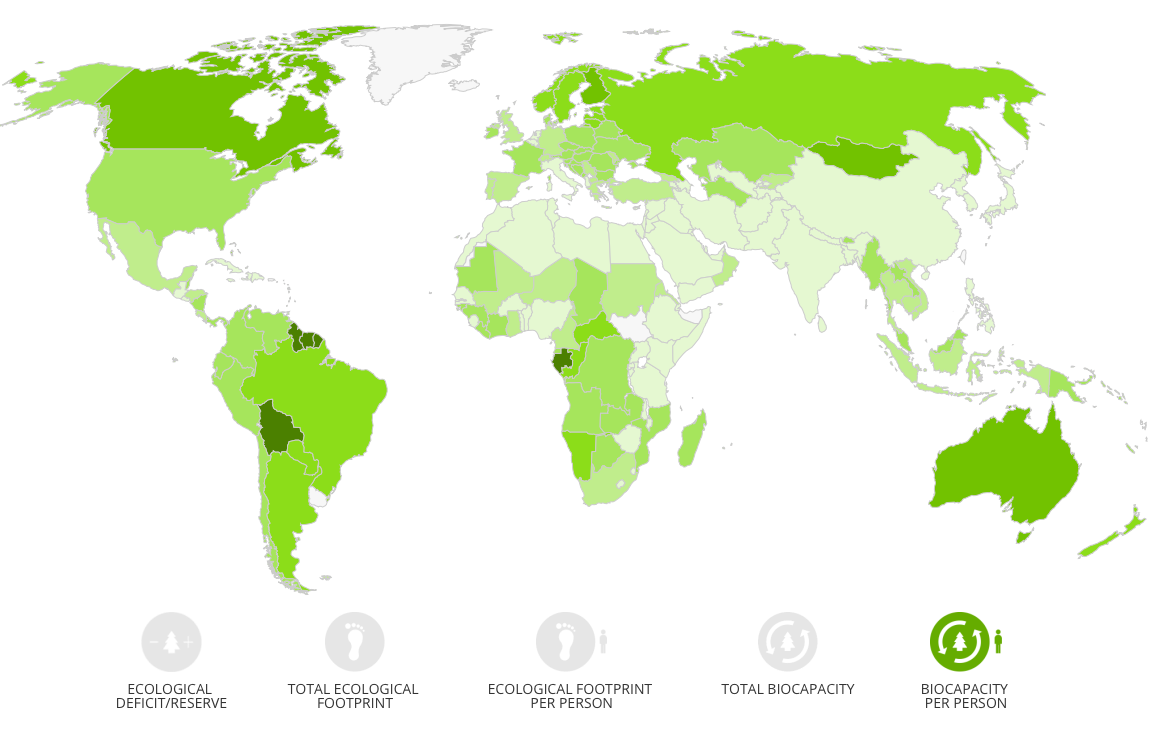
Since 1990 the global Ecological Footprint has been measured from 1961 until today. Since 2003 the Global Footprint Network are publishing the national footprint and bio capacity account for each and every country thanks to help of UN statistics. This year demand exceeds planets ability to renew by 60%, which means we’re are not within the planetary boundaries and definitely use much more resources than what is sustainable.

To guarantee non-biased and objective gathering of data the Footprint Data Foundation (FoDaFo) has been founded to keep on steward of the accounting and reproduce them with the support of York University and a broader academic network.

It’s very important that data is being save guard and objectively measured and analysed. Please check out the website of the organisation where they also have a blog and commitments from several countries on #movethedate and don’t miss out the data illustrations on the Footprint Networks data website.

It's time for EU to create a Wellbeing Economy

In september WWF published a report Towards an EU Wellbeing Economy - a fairer, more sustainable Europe post Covid-19, for EU to adapt to a wellbeing economy approach that serves people and the environment rather than “business as usual”. The report is a response to EU and it’s member stats focusing on conventional economic growth as the best method to stimulate society and move us out from the current crisis. The report claims that current policies might risk investments needed for a green transition and might end up in fossil fuel energy or intensive agriculture. The reports says that instead we should measure what we treasure.

In the report you can read about how GDP growth per country has played out in relation to other measures such as Gini Index, Happy Planet Index, Human Development Index and Ecological Footprint, which shows that high GDP does not correlate with high happiness index and so on. The report is therefore questioning “green growth” and mean that decoupling is inefficient.

The report is mentioning a few examples who has chosen other measures, indices or index in their budget. New Zealand, Finland and Iceland being among them. And are calling for EU to develop indicators for a Wellbeing Economy.

Read more about the insights, the reasons and the specific calls for EU to implement here!

Can technology save us from climate disaster?

1604777944.jpeg
DGnOqjMUwAMASUP.jpg

At SVTplay program, Vetenskapsvärld (the world of science), you can now watch a documentary (in Swedish) about the technology that seeks to solve the climate crisis. The question asked is, if technology can stabilise the climate again?

For all non-Swedish speakers, here comes a summery:

We are currently emitting 37 gigaton CO2 into the atmosphere every year. If you add all the carbon that has been released into the atmosphere we’re talking about 1000 gigaton CO2 since pre-industrial time. If we want to halt the effects of climate change we need to stop emitting CO2 and we need to start finding ways to reverse the climate balance by storing CO2.

There’s 3 trillion trees on the planet. More than stars in the universe.

Some of the technologies and companies presented are:

  • CO2 capturing by Climeworks (that sucks CO2 out from the atmosphere). The vision is to capture 400 million tons CO2 (1% of the atmosphere).

  • Capturing CO2 and then turned it into metanol liquid (also in relation to Climeworks, by energy from solar power). It can be used for transportation resulting in neutral CO2 emissions (since the carbon is captured from air and released into the air). If all climate neutral fuel projects, that is currently being tested, can be and will be used, they can lower the carbon footprint per year with 1 billions of tons.

  • Carbon storage methods, such as those presented by Xprize. One of the technologies wants to lower the carbon footprint of cement production (8% of global footprint comes from cement production) by storing carbon and turn it into a material that can be mixed with other materials for cement production. If 20-30% of the cement would use this method a larger part of the yearly 37 gigaton would be cut.

Despite these promising technologies and even if they are scaled up to largest possibility, they won’t be able to capture all the 37 gigaton released every year. But in combination with moving away from fossil based energy into renewable energies, we can actually stop emitting CO2.

But that doesn’t mean that the problem is solved. We still need to capture more CO2 even if we do not emit anymore.

Other technologies presented to deal with this problem is:

  • Adding sea salt particles to clouds to increase the reflection of sunlight (with the purpose to cool the planet). It’s going to take 15-20 years to know if this method works and its side effects.

  • Increase of forests to capture as much CO2 as possible. NASA has developed a method to measure the carbon storage of a forest. There’s currently 3 trillion trees on the planet. More than stars in the universe (based on what we know).

One can wonder if tree planting really is a technology, but to be able to know which trees to plant where, technology is a good tool to maximise carbon storage, biodiversity and in combination with socio-economic development too.

These new technologies won’t solve the climate crisis, it’s the combination of technologies and new practices that’s going to highly reduce the emissions. But in the end, we all need to change they way we live and the structure of our society since demand is increasing and technology is currently not keeping up.

48 action points on how to reduce the environmental and climate impact of consumption in Sweden

Screen Shot 2020-10-30 at 11.22.42.png

This seminar is about the Trade Union (Handels) program on the sectors climate and environmental impact. The report has interviewed members and employees from a diversity of companies in Sweden. Some of the findings presented are:

  • 9/10 thinks the sector should reduce its environmental and climate impact.

  • 90% think the companies should take more responsibility.

  • 85% asks for political regulations.

  • 45% would like to contribute to their employers sustainability work.

Facts about the sectors environmental and climate impact:

  • The consumption based emissions in Sweden are twice has high as the territorial.

  • Within Sweden the sector is responsible for 2-3% of the national emissions.

  • The products these companies sell represents 50% of the consumption based emissions.

  • 40% of the emissions comes from food.

Suggested actions (there’s total 48 of them):

  • Make sure employees has the right knowledge.

  • Politicians should create consumption based targets on reduced emissions.

  • All companies should declare the products climate and environmental impact.

  • Targets and limits based on the declaration, too harmful products shouldn’t be available on the market.

  • Politicians should invest in solutions for circular economy, to facilitate renting, repairing and so on.

  • Bann products with a consciously chosen short life-span.

  • Label products after their lifespan.

  • Reduce use of emballage.

  • Harder actions to reduce fossil based transportation.

  • All companies should pay for transportation, this is something they compete on and not good for the environment.

  • All products should be labelled with information on where they have been produced.

  • Support farmers to transform to organic farming.

It’s going to be interesting to see how this trade union manages to push for change and action on all this 48 action points. Watch the seminar in Swedish.

Is our economy making us sick?

Screen Shot 2020-10-13 at 11.55.20.png
Screen Shot 2020-10-13 at 11.57.00.png
Screen Shot 2020-10-13 at 11.24.41.png
Screen Shot 2020-10-13 at 11.57.18.png
Screen Shot 2020-10-13 at 11.32.45.png

The New Economic Foundation has a launched its second issue of The New Economics Zine, this time about economics and mental health. We knew before the pandemic that mental health was a problem only getting worse. According to the issue, new research in the last few weeks has shown that anxiety has trebled in young adults since 2008, affecting 30% of women aged 18-24. Our experience of mental ill health is however not equal – factors like race, economic class, gender identity and disability all affect our likelihood of struggling with mental illness. The issue further explains that The Health Survey for England has consistently found that the poorest people have the highest risk of having a mental health problem.

This is why economic crisis makes health inequality worse.

Except the inequality aspects of mental illness, specially during a pandemic, the issue are also bringing up the aspect of stigma and governmental spending. While mental health accounts for 28% of the burden of disease in the UK, mental health services receive only 13% of NHS spending. The issues says; “it’s a reminder that awareness alone is not enough and that, while each of us can make a difference, we need structural not just individual action”.

The first article is just about that, how individualisation and neoliberal thinking makes us believe that it’s just all up to us as individuals. Actually, antidepressant prescriptions have almost doubled over the last 10 years, with a 34% increase in people being detained under the Mental Health Act. As of 2018, one in six of us (UK) is suffering with a mental health problem. 

This should indicate a larger societal and structural problem than just individuals not doing enough to keep themselves healthy.

The issue also include articles about climate anxiety and measures of wellbeing. It is a magazine that really captures several aspects of sustainability, mental illness and economics in relation or not in relation to current crisis. It’s easily read and there’s a diversity of writes with different background and expertise.

Read the magazine here!